Monday, September 03, 2018

Aeolus House Press launch Sept 9, including The Undead by Colin Morton


Toronto-area poet and published Allan Briesmaster returns to Ottawa for a launch of new books and readings by Ariane Blackman, Stanley Fefferman, Thomas Gannon Hamilton, Penn Kemp, Brian Cameron, and Colin Morton. 
Admission free. Books for sale. Pressed's usual great menu.

Sunday, September 9th 4:00 – 6:00 at Pressed, 750 Gladstone Avenue 
Admission free. Books for sale. Pressed's usual great menu.
Sunday, September 9th 4:00 – 6:00 at Pressed, 750 Gladstone Avenue www.pressed-ottawa.com free admission – books for saleOne of the books being launched is The Undead by Ottawa’s Colin Morton, who describes his book at his webpage: https://colinmorton.net/2018/07/21/preview-of-the-new-chapbook/  


The Undead

They gave us their hearts
with leaky valves.
The tools they fashioned
hang on our walls
though we no longer reap or sow.

They lumber through our dreams
murmuring of blood
till morning mist rises
and we wake
wearing their faces, our voices theirs.

The Undead in the title of my new collection of poems are the ones who came before us, who in part made us the way we are, who defined the limits of our hopes. It’s spooky, but it’s not supernatural. Our collective history on this continent has been misrepresented, misremembered and, most often forgotten. Our settler ancestors have been too busy transforming the environment to really know and understand it, with consequences still to be seen. Some say the past is best forgotten, or better, repudiated. But not so fast. With no sense of the past behind us, the fast-approaching future haunts us.

Most of my forebears emigrated from England and Ireland directly to Canada in the 1830s and 1840s, but very soon, as they married the locals and became Canadian, their children and grandchildren had ancestors, through their Canadian spouses, who had been Champlain’s filles du roi or, like mine, had been Puritans and Separatists seeking religious freedom in New England in the 1600s. Even now immigrants from, say, Taiwan or Syria settle in Canada and before long, some of their children or grandchildren will probably be able to trace their ancestry back to the Mayflower. That’s part of our story, and it holds some of the answers to how our country got to be the way it is. Faulkner said “the past is never dead, it’s not even past.”

Anyway, how about my book, The Undead?


Beginning with a family history compiled in 1927 and presented by his sons to my great-grandfather Eli Morton on the shores of Lake Simcoe north of Toronto, I try to follow the path Mortons and the neighbours they married trod from the northern States to the shores of Lake Simcoe (in what was then the Home District of Upper Canada). That was home to my great-grandfather Eli’s grandfather, Elder Squire Morton. An itinerant lay preacher, Squire ranged widely on his twice-yearly missionary trips, between Niagara in the west and Oshawa in the east, and he gave a corner of his farm for the first Methodist (“Christian”) church in the district. His grave marker in Unionville cemetery quotes New Testament scripture about having “fought the good fight” and continues with ever smaller, more cramped and illegible scripture, indicative perhaps of the sermons the elder gave in kitchens, school rooms, and on hillsides “from Sharon north to the lake.”

That evangelical streak, which continued well into the 20th century in parts of the family, was deeply grounded on the other side of the family too. In my poems I’ve focused on only a few of them, because I have an idea of how quickly such stories get boring. Also, I don’t look only at my direct forebears – my interest isn’t about blood lines or even DNA, the family tree is wide. It’s the cultural baggage we carry (sure, white privilege, in my case) that I’d like to understand and, if possible, influence. In this I guess I’m like the radical preachers in colonial New England. Like Obadiah Holmes (actually my wife Mary Lee Bragg’s direct ancestor, as well as Abraham Lincoln’s), who took his thirty lashes at the Boston whipping post for false preaching and afterward said they felt like rose petals. Like Jonathon and Richard Dunham, alias Singletary, whose wanderings and rantings brought him charges of witchcraft in Salem (and whose descendant Barack Obama became president).
The Puritans arrived on the continent not so much as invaders but as refugees from religious discrimination, wanting to be left alone to create their new Jerusalem in peace,
where dwelt “none of contrary view”

Neither Quaker nor Baptist
nor vagrant nor vagabond.”

This sounds wrong to us now that diversity has replaced piety as a social virtue, and the Puritans’ wish to remain separate from the rest of the world was as doomed as that of the native peoples. But I’m afraid that their conviction they were saved and everyone else was damned got in the way of peace and respect and shades of the attitude still linger in some minds today, hindering us in getting to reconciliation. Just one of the ways the “undead” continue to haunt us.
A breaking point came in 1676 with what has been called King Phillip’s War. The war ended terribly for King Phillip, the Wampanoag chief who tried to take back the land he had sold. Many died in the fighting, but more from disease or starvation after being driven out of their villages. The rest were taken in and absorbed by neighboring tribes. English settlers suffered badly too: in proportion in the population, King Phillip’s War was more devastating than the Civil War two centuries later. A third of English towns and villages were destroyed or abandoned, including the “frontier” town of Groton, Massachusetts, where two of my direct ancestors (John Nutting and his son John) were killed, and another (Major Simon Willard) led the militia that raised the siege of the town. In the kind of collective punishment that I decried when practised against Sitting Bull’s Lakota in my book The Hundred Cuts, the Wampanoag and their allies attacked English farms at random, including the home of my ancestor Thomas Eames, who left an itemized account of every lamb, wagon, blanket and sack of corn he lost, beginning with “a wife and nine children.” The compensation awarded him by the colonial government after the war was “200 acres near to Mount Waite”; coincidentally “near to Mount Waite” in Rhode Island is where King Phillip’s home village had been located, the last piece of land he did not sell.

Working back through time, the way researchers do, my series attempts to wind back the centuries to the moment when a Wampanoag walked out of the forest and said to the Pilgrims, “Welcome English, let us help each other.”
Then I step back to the present, with the future careening toward us at a terrifying pace. We face tough challenges, steep odds. But then, so did they, the undead.


The Future

Have we all now turned millennial?
Après moi, you say, the year of the flood.
But we’ve seen the world end before, on the big screen,
and we feel helpless. Hopeless.

For each of us the future is brief.
Maybe that’s why imagination
turns dystopian. Without us, we say
the world will be empty, desolate.

Look back. They had so much
to look forward to then –
ourselves, strong and free,
wearing their faces.



Saturday, September 01, 2018

We Who Are About To Die : Alyse Knorr

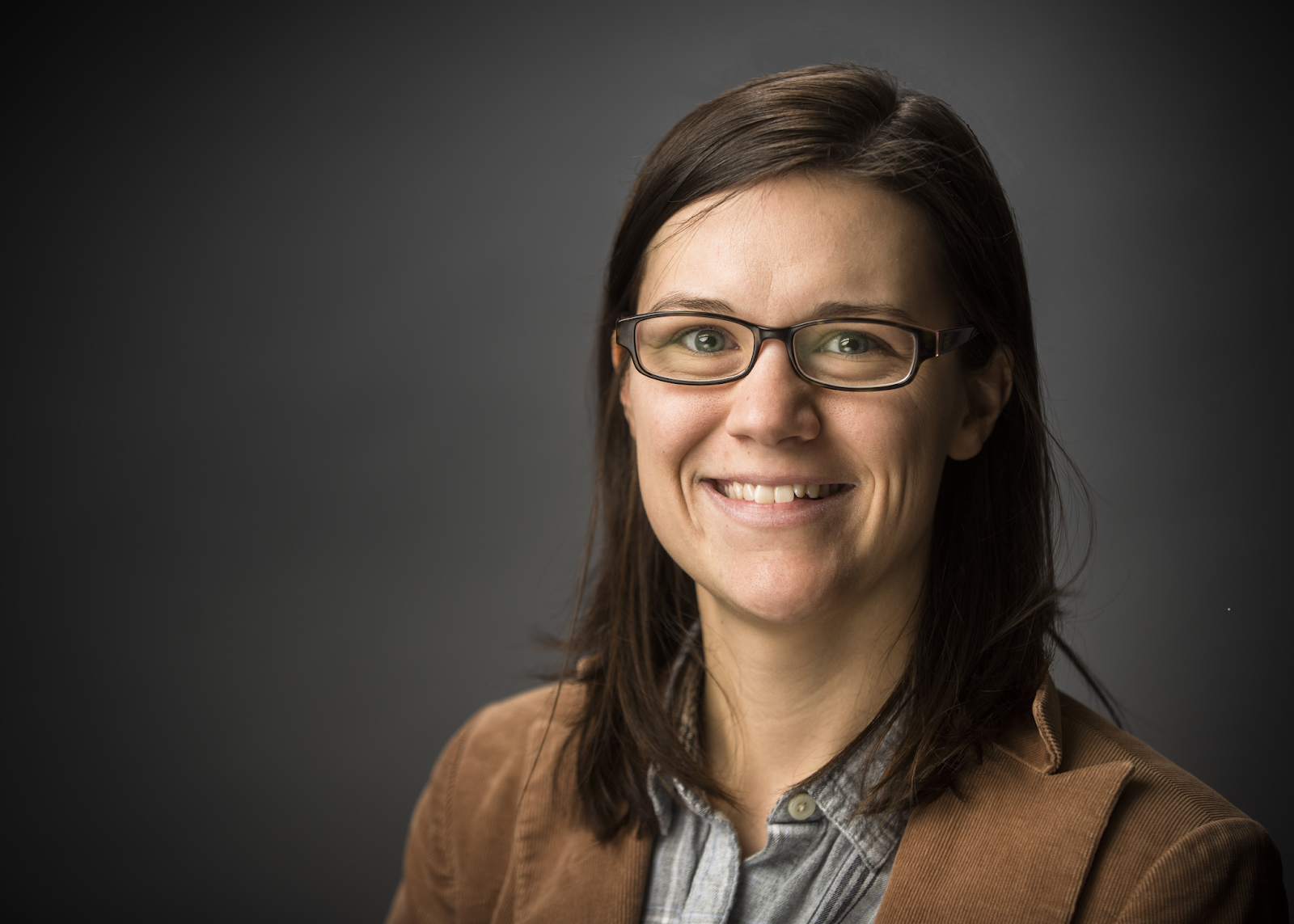
Alyse Knorr is an assistant professor of English at Regis University and editor of Switchback Books. She is the author of the poetry collections Mega-City Redux (Green Mountains Review 2017), Copper Mother (Switchback Books 2016), and Annotated Glass (Furniture Press Books 2013), as well as the non-fiction book Super Mario Bros. 3 (Boss Fight Books 2016) and the poetry chapbooks Epithalamia (Horse Less Press 2015) and Alternates (dancing girl press 2014). Her work has appeared in Alaska Quarterly Review, Denver Quarterly, Columbia Poetry Review, The Greensboro Review, and ZYZZYVA, among others. She received her MFA from George Mason University.

Where are you now?
I live in Denver, where I teach English at Regis University.

What are you reading?
I recently finished Monica Youn’s “Blackacre” and now I’m reading “Giovanni’s Room” by James Baldwin.

What have you discovered lately?
Lately I’ve been discovering the beauty of mathematics. Growing up I was always pretty afraid of math, since it didn’t come easy to me and I often felt frustrated that I couldn’t understand the simplest of concepts. But my colleagues in Regis’s math and chemistry departments have helped to show me the elegance of mathematics and the imagination and creativity involved in this discipline. Math is very similar to poetry, in its use of symbols and metaphor. I love to hear my colleagues talk about the beauty of their favorite equation, or the revolutions of geometry.

Where do you write?
I usually draft on my laptop on my living room couch and revise by hand on print-outs. Occasionally I also write on my desktop at work.

What are you working on?
I’m currently at work on two projects: an opera libretto about the life and work of Christine de Pizan, the world’s first professional woman writer, and a poetry project called “Wolf Tours” about a pack of wolves that runs a wilderness touring company in Colorado. 


Have you anything forthcoming?
Yes, I have a few poems forthcoming at print and online magazines, including a piece called “Epistemology of Wolves” that will be  published by Alaska Quarterly Review.

What would you rather be doing?

I love video games, baking, and running, and often wish I had more time to do all of these. I also really enjoy traveling and working on my new house. I’ve been learning how to tile and how to do basic plumbing and electrical work, but there’s never enough time to do all the projects I want to do!


Two poems

Floating Epithalamium” at Alaska Quarterly Review

Genesis” at Requited

Wednesday, August 22, 2018

On Writing #154 : Natalee Caple

What Makes a Good Gift in a Gift Economy[i]? Thinking about Selfhood and Responsibility in Love in the Chthulucene / Cthulucene

Natalee Caple

In my last book of poetry, The Semiconducting Dictionary (Our Strindberg), I wrote a poem in which I imagined being an August Strindberg imagining being the artist J.W. Turner, writing his will. The poem was loosely based on Turner's actual will but it was an exploration of what one person sees in another and, more specifically, what one artist, knowing themselves in all of their failings, sees in another artist who they admire. Although the point of view in that poem is nested (Caple as Strindberg as Turner), my favourite lines of that poem are in first person: "I did not paint the sea I painted / What the sea painted in me.".

I wondered if it was that feeling of the chaos inside made visible that I felt looking at Turner's paintings that might have drawn the notoriously ill-tempered, perpetually embattled Strindberg to the seemingly generous (but secretive) Turner. In that book I performed a kind of feminist occupation of the playwright (who I imagined as a woman living as a man and his famous misogyny as part of the disguise or else self-loathing) that became loving but was always attuned to using a character, one that was, in many ways, performing a life and the experiences of a historical person, but who was clearly layers of me thinking about that life and the gendered political themes of the age. I was both Strindberg and his cruel director. It was me who pinned Strindberg to Chekhov, Marx, Darwin, and a train. It was me who never gave him a heroic moment, a cure for his ailments, or even a bathroom break. I may have come to love a Strindberg, but my love benefitted neither the character nor a lifeform once named August Strindberg. 

When I wrote my last novel, In Calamity's Wake, I did something similar (but perhaps feeling closer identification) with Calamity Jane and numerous historical contemporaries. In that book I explored voice and I tried to restore voice to many, but I also explored the damage that celebrity and cultural use of a figure do to any chance of locating or fixing a stable understanding of personhood or selfhood behind a name. Of course, I wanted to acknowledge that a name can have expansive social meanings the name-haver has no control over, can become symbolic in ways the embodied does not choose. As in Our Strindberg, the character of Calamity Jane is shown to be a vehicle for the fantasies and concerns of many. I also wanted to restore a sense, however ephemeral, of a living breathing woman obscured within the twisty puzzle of mythmaking -- a puzzle that did not provide the literal woman food, shelter, money, or protection. I wanted to see her life valued, beside countless unnamed others like her (the working poor), and understood as precious simply for having been.

With my new book of poetry, Love in the Chthulucene / Cthulucene[ii], I ruminate publically on the way I hide myself in every character, in every poem. What I show is never the real world (the sea) or people as they are, but it is a world made in me by sharing place and time with others (what the sea painted in me). I wondered about my ethics in animating long dead figures who have no chance to protest my politics (though I still love those characters). I decided to deliberately and consciously explore the productive nature of lively literary friendships and/or influences and to offer my explorations as gifts that could be directly accepted or refused. I also decided to speak more directly and more often as myself. At first, I began this with wholly positive intentions. That book would have been my love letter to CanLit. I held the concept of community in inestimable esteem without considering that "communities" also do terrible things.

Many of the poems in the book are still loving and fun and meant to affirm the receiver in the way that gifts can say, Iin all of what happens in life I want you to know that I see you, I believe in you. I am invested in believing that fun poems matter and teasing poems matters. Happiness is a profound emotion worthy of exploration. However, because things in my life and various communities complicated themselves, and that is what happens (the writing of every book is a part of one's life), the resulting content of the book was affected by the conditions under which it was produced in ways that I think are more visible because there is no historical draping, no hiding in costume to say what has happened. These conditions included both personal joys and tragedies as well as global news in which I heard echoes from the lives of other women across time, specifically in relationship to the #MeToo movement, but also to people living, loving, and dying together in complex relationships. The result was a book of poems I wrote as gifts that externalize the effects of other people and their work on me and my work as well as processing my experiences (especially) as a woman prior to and during the writing of the book.
  
Several thinkers deeply influenced key parts of my thinking around the ethics of this project: Donna Haraway's concept of "tentacular thinking" about finding "kin" in the world, in animals, and the environment, as well as with each other, to live and die together profoundly (she says "potently") in an age that is not all about humanity.[iii] Haraway follows after Hortense Spillers, who talked about "kinship" and survival for Black women as early as 1985. Sarah Ahmed's thinking about feminist living, and Margaret Christakos's term "influency," were important to me as well. Christakos coined the term "Influency," for her reading series where writers reflect at length on each others' work. All of these thinkers helped me to imagine how reading and writing together might be part of a fluent exchange outside of capitalist economies, part of a way of acknowledging that we make each other and that we must figure out how we will "be" together.

Anthropologists, philosophers, and literary theorists have considered the gift and gifting at length (Marcel Mauss, for example). For me, thinking about gift processes and how they might differ from citation illustrated the many ways that citation and gifting are both part of complex social relationships that rely on fuller contexts. Citation and gifting are not identical processes with identical obligations. Neither can ever be neutral processes. Both are entangled in histories. Both also reflect privilege and have social outcomes. Reading and writing are themselves privileges as well as social outcomes, with social implications, and consequences. Citation carries with it responsibilities to tracing origins in ways that are both necessary for respectful discourse and dangerously patrilineal (as well as white) in design, given the ways that origins have historically been traced in Western Eurocentric culture. In academia, we cite as if we need not ask, and sometimes poor use can be made of another's voice. Worse, a failure to cite, particularly ideas that originate outside of recognized genres of publishing, amounts to erasure[iv]. But if citation carries certain perils and limits, so too does gifting. The good gift in a gift economy relies on complex listening and consent, ongoing relationship, and a willingness to accept that what was a good gift in concept may not be a good gift in fact.

Much more important to the good gift than the intentions of the giver, is what actually does happen, or could happen as a result of the gift, as well as the context and mode of gift giving. For example, a private gift is a very different thing from a public dedication with permission. To ask permission of a much more famous person, or a stranger for a dedication, might ask for or pressure endorsement for my own book (whereas citation carries no obligation of acknowledgment). To ask permission for public dedication of a very close friend for a poem that is about #MeToo or grief or cancer or orgasm may have other emotional pressures attached. The receiver may be made vulnerable by such a gift. And there are good reasons why accurate citation or elision are better practices for some works in terms of authorial freedoms. For example, if one chooses to write about current events using the names of public figures, or to write back to writers one disagrees with, then the freedom to be critical in print or to participate in public discourse without asking permission to disagree is important as well. Agreement has little value where disagreement is not allowed. Or, perhaps one wishes to speak frankly of one's own experiences and not violate the rights of others by naming them. One may choose elision over citation at times for practical reasons, for example if one does not want to be sued over a poem.

In the case of most of the poems in Love in the Chthulucene / Cthulucene I gifted poems to people as they were written, and then, in advance of publication, I asked for permission for public dedication. In some cases, across the process, I wrote poems that people said they did not want and those poems were deleted from my hard drive – they will never exist in any form because that is not a good gift. A giver must consider the impact and implications of their gift and people must be able to refuse for any reason or none. This is particularly true when thinking about privilege in a world where historically some "gifts" have had devastating consequences.

An unanticipated part of the process was that I had to consider that I did not think as well in new forms about my ethics and I had to adapt. When I first began drawing or making prints of people, such as the ones that appear in the book, I did not always ask for permission or think about the ethics of reproducing a face because I thought it was only for myself, a way to cope with deep depression and loneliness by conjuring beloveds on paper when I did not feel capable of bringing myself to their persons. Not being a visual artist, I did not give the thought to drawing that I would give to writing about a living person. Later, when I saw a connection between the poems and pictures I asked permission for dedication, showing each person the context in which their likeness would appear in the project. Now I ask permission before drawing anyone and understand better the responsibility of the visual artist to consider what constitutes acceptable use of their own vision (as a literal sense as well as a metaphor).

In a very few cases, (for example, Leonard Cohen and Taliesin) I knew from the beginning that I would be unable to obtain permission for my work without a time machine and it should be considered that those poems exist without permission (for now). I'm not saying that is OK but it is the choice I made. In some cases, I was no longer in contact with people whose work I reflected on, things change rapidly in charged times, but at the time of the poems' creations I had notified those people and obtained their approval. For the sake of history, I chose not to erase those people or poems – I kept those poems in. I felt it best to still say how it was / who it was I considered. My intentions may be received, as I hope, as respectful, but they may not be. My choices come with the consequence of potential criticism, and criticism, even harsh criticism, is the right of all readers.

I tried with Love in the Chthulucene / Cthulucene to think critically about how we make each other, how to be together ethically, as writers and as people and on the planet. This will be an ongoing practice. There were many influences I was unable to adequately capture. I didn't come up with a plan for the world's future. I used reading and writing to learn about selfhood, to learn how to speak as myself and to recognize my privilege, and to explore new forms and ideas and push back and participate, and all of those are lively processes that change. I am not a model reader or even a particularly good person (I know myself in such excruciating detail). But I did and do experience thinking on and with others' work as a gift for which I am grateful in my marrow. In the light of that gift, I go on. I go forward thinking about myself as one of some, and considering my enmeshed obligations as a friend, a person, a writer, a professor to make and keep space for others past present and future.


Natalee Caple is the author of nine books of poetry and fiction. Her latest book of poetry, Love in the Chthulucene/Cthulhucene (from which these poems come) will be out with Wolsak and Wynn in Spring 2019, and her chapbook Love/Wildness appeared earlier this month with above/ground press. Natalee is an associate professor at Brock University.


[i] Gifts and Gift economies have been widely studied and theorized in anthropology, philosophy, literary criticism and elsewhere (by Marcel Mauss and many others). This essay is a personal essay about my own recent experience and thinking on that experience and does not claim to have discovered anything for the first time.
[ii] Haraway explicitly distances her concept of the Chthulucene from the literary monster Cthulu. It seems very likely she would not approve of my own letter reversal that lets the monster back in. I say this to note that it is me who let the monster in and could not leave off thinking about an age of monsters and/or monsters as expressions of human and/or authorial guilt, even as I knew that is not what Haraway wanted or meant when she coined the term Chthulucene.  
[iii] I feel ambivalent about my privilege when attempting to think outside of humanity, or even outside of oneself, in that, though I do believe it is necessary thinking for our planetary survival, I also think that it is not a privilege that all people are in an equal position to consider.

[iv] It's worth noting that I have performed such an erasure as I mention here by skipping to my personal essay instead of setting up my use of "The Gift" or "gift economies" within the scaffolding of broad citation.

Ahmed, Sarah. Living a Feminist Life. Durham, NC: Duke UP, 2017.
Haraway, Donna. Staying With the Trouble: Making Kin in the Chthulucene. Durham, NC: Duke UP, 2016..
Mauss, Marcel. The Gift: Forms and Functions of Exchange in Archaic Societies. Eastford, CT: Martino Fine Books, 2011. (reprint of 1954 American edition)

Spillers, Hortense. "Kinship and Resemblances: Women on Women": Review essay: Feminist Studies; Spring 1985, Vol. 11, p111-125.


Sunday, July 01, 2018

We Who Are About To Die : Eric Schmaltz

Eric Schmaltz is an artist, writer, and educator living in Toronto. His work has been previously featured in Lemon Hound, Jacket2The Capilano Review, The Berkeley Poetry Review, The Puritan, and Open Letter. His first book of poetry and text-art, Surfaces, is available from Invisible Publishing. For more: ericschmaltz.com or @eschmaltzzz.

Where are you now?
Physically, I am in Toronto, Ontario, a city that occupies the traditional land of the Huron-Wendat, the Seneca, and the Mississaugas of the Credit River. Mentally, my sense of where-ness is distributed across this space and a multiplicity of other spaces, networks, devices, and future tenses.

What are you reading?
I’m reading a lot again. Most recently,
Living a Feminist Life by Sara Ahmed, Johnny Appleseed by Joshua Whitehead, Sludge Utopia by Catherine Fatima, and I Left Nothing Behind On Purpose by Stevie Howell.

What have you discovered lately?
I’ve recently discovered the privilege of a less structured mode of living that is very temporarily untethered from the direct machinations of the neoliberal institution of higher education. 

Where do you write?
I create wherever I can I place my laptop.

What are you working on?
I’m working on a few things: I’m researching for a new poetry project, (finally) completing a final draft of an edition of
I Want to Tell You Love by bill bissett and Milton Acorn, and editing the inaugural issue of Not Your Best, a new periodical published by Knife | Fork | Book.

Have you anything forthcoming?
I have a handful of periodical publications forthcoming, including poems, articles, interviews, and book reviews.

What would you rather be doing?
Nothing.


from Assembled Lines


Tuesday, June 12, 2018

On Writing #153 : Lorri Neilsen Glenn

Writing, Attention and Words from the Wise
Lorri Neilsen Glenn

Every so often something shatters like ice, and we are in the river of our existence. We are aware.  Louise Erdrich

Why do I write? I think it’s because writing forces me to pay attention. The worn decals on the repairman’s flatbed truck, a grimace on the face of the young mother struggling to lift the rain-soaked stroller into the bus, the nest of tubes hooked up to my mother’s arm in the ER. These moments of human despair, joy, resilience and triumph are atoms in our macrocosm, ordinary stardust, according to theoretical physicists--and, of course, Joni Mitchell. They’re the basic stuff of life. Paying attention, according to philosopher and activist Simone Weil, is the purest form of generosity.
 
When I turn the pen inward, paying attention to my own responses to losses or grief or perplexity, I am buoyed by the revelations; buoyed, that is, until the words begin to ask me uncomfortable questions. Who do you think you are? What have you learned? Are there other perspectives you’re not listening to?
 
Or, as Lee Maracle says: Where do you begin telling someone their world is not the only one?
 
When I read poetry and prose, I am, to paraphrase the Brazilian activist Paulo Freire, reading worlds. I’m in the hold of the ship with Aminata Diallo, at the Colonel’s table with Carolyn Forché as ears fall to the floor, walking in the reserve’s graveyard with Louise Bernice Halfe.

I linger inside the richness of another universe, admire the exquisite workings of the human imagination.
 
Reading can challenge me, but writing seems to ask more. If I truly attend to what’s going on around me, my assumptions will be pried apart and I’ll be pushed into uncertain territory. Most writers know this uncertainty. And, as Pema Chödrön says: Sticking with uncertainty is how we learn to relax in the midst of chaos.
 
And, lately, that’s where my mind is: in chaos. Climate disasters, political goat rodeos (as one wag put it), shootings, unsafe water in countless Indigenous communities, the volume of the abhorrent and absurd raising higher and higher. Add to those the cold breath of mortality—time is short. If it’s critical that I pay attention now, and I believe it is, how much attention -- and to what -- is too much? too little?
 
Chaos finds me measuring out my life in the online equivalent of Eliot’s coffee spoons. My mind floods with inchoate fury at another incidence of violence against women, BIPOC and non-binary people; erasures of whole communities; and the rising tide of everyday mean-spiritedness and injustice. I am over aware.
 
And torn: the written word seems impotent.
 
Yet more necessary than ever.
 
Enter the uncomfortable questions. Who needs your privileged tears? Yes, you’re mortal, so where will you focus your efforts? Why can’t you, like the inimitable Diane Lockhart advises, work on keeping your own little corner sane?
 
Albert Einstein was right: The only thing that can defeat absurdity is lucidity.
 
I admire writers who overcome their uncertainties and work their way through chaos. I’ll start with Einstein’s word, lucidity –a word whose origins refer to light.
 
Simone Weil said only beauty and affliction can pierce the human heart. When I first began to write, I felt that truth in my bones. If I can step away from the clamorous racket around me, if I am to effect any change or wrest any beauty out of the goings-on in my corner, I have to return to the elemental, to small illuminations, seek meaning again in particulars. My Métis grandmother’s enigmatic smile in the last and only family photograph. The frenzy of gulls behind my neighbour’s fishing boat, returning home.
 
Word by word by word by uncertain word.  


Lorri Neilsen Glenn’s latest book is Following the River: Traces of Red River Women (Wolsak and Wynn), a multi-genre memoir about her Cree and Métis grandmothers and their contemporaries. Professor Emerita at the Mount, Lorri is the author and editor of fourteen titles, and her award-winning poetry and prose are widely anthologized. Lorri has led writing workshops across Canada, and in Chile, Ireland, Australia and Greece. She teaches in The University of King’s College MFA program in creative nonfiction. @neilsenglenn

Friday, June 01, 2018

We Who Are About To Die : John M. Bennett

John M. Bennett has published over 400 books and chapbooks of poetry and other materials.  Among the most recent are rOlling COMBers (Potes & Poets Press); MAILER LEAVES HAM (Pantograph Press); LOOSE WATCH (Invisible Press); CHAC PROSTIBULARIO (with Ivan Arguelles; Pavement Saw Press); THE PEEL (Anabasis Press); GLUE (xPress(ed)); LAP GUN CUT (with F. A. Nettelbeck; Luna Bisonte Prods);  INSTRUCTION BOOK (Luna Bisonte Prods); la M al (Blue Lion Books); CANTAR DEL HUFF (Luna Bisonte Prods); SOUND DIRT (with Jim Leftwich; Luna Bisonte Prods); BACKWORDS (Blue Lion Books); NOS (Redfox Press); D RAIN B LOOM (with Scott Helmes; xPress(ed)); CHANGDENTS (Offerta Speciale); L ENTES (Blue Lion Books); NOS (Redfoxpress); SPITTING DDREAMS (Blue Lion Books); ONDA (with Tom Cassidy; Luna Bisonte Prods); 30 DIALOGOS SONOROS (with Martín Gubbins; Luna Bisonte Prods); BANGING THE STONE (WITH Jim Leftwich; Luna Bisonte Prods); FASTER NIH (Luna Bisonte Prods); RREVES (Editions du Silence); NEOLIPIC (Argotist); LAS CABEZAS MAYAS/MAYA HEADS (Luna Bisonte Prods); BALAM MALAB (Logan Elm Press); LA VISTA GANCHA (Luna Bisonte Prods); THE SOCK SACK/UNFINISHED FICTIONS/MORE INSERTS (with Richard Kostelanetz; Luna Bisonte Prods); T ICK TICK TIC K (Chalked Editions and White Sky Books); THIS IS VISUAL POETRY (This is Visual Poetry); EL HUMO LETRADO: POESÍA EN ESPAÑOL (Chalk Editions; 2nd ed. White Sky Books); ZABOD (Tonerworks); TEXTIS GLOBBOLALICUS (3 vols.; mOnocle-Lash Anti-Press); NITLATOA (Luna Bisonte Prods); OHIO GRIMES AND MISTED MEANIES (with Ben Bennett, Bob Marsh, Jack Wright; Edgetone Records); SUMO MI TOSIS (White Sky Books); CORRESPONDENCE 1979-1983 (with Davi Det Hompson; Luna Bisonte Prods); THE GNAT’S WINDOW (Luna Bisonte Prods); DRILLING FOR SUIT MYSTERY (with Matthew T. Stolte; Luna Bisonte Prods); OBJECT OBJET (with Nicolas Carras; Luna Bisonte Prods); CARAARAC & EL TÍTULO INVISIBLE (Luna Bisonte Prods); LIBER X (Luna Bisonte Prods); CUITLACOCHTLI (Xexoxial Editions); BLOCK (Luna Bisonte Prods); THE STICKY SUIT WHIRS (Luna Bisonte Prods); PICO MOJADO (with Byron Smith; Luna Bisonte Prods); SOLE DADAS & PRIME SWAY (Luna Bisonte Prods); OLVIDOS (Luna Bisonte Prods); SACARON NAVAJAS (Redfoxpress); AREÑAL (with Luis Bravo; Yaugurú); LA CHAIR DU CENOTE (Fidel Anthelme X); THE LUNCH THE GRAVEL (X-Ray Book Co.); BRAVÍSIMA RESEÑA (with Diana Magallón; Luna Bisonte Prods); TURNS IN A CLOUD (White Sky Books); YES IT IS (with Sheila E. Murphy; Luna Bisonte Prods); DE LA MEMORIA EL PEZ (with Lola López-Cózar; Luna Bisonte Prods); AMINIMA (with Richard Kostelanetz, Archae Editions); MIRRORS MÁSCARAS (Luna Bisonte Prods); VERTICAL SLEEP (Luna Bisonte Prods); SELECT POEMS (Poetry Hotel Press/Luna Bisonte Prods); THE WORLD OF BURNING (Luna Bisonte Prods),  THE SWEATING LAKE (Luna Bisonte Prods), and OLAS CURSIS (Luna Bisonte Prods).  He has published, exhibited and performed his word art worldwide in thousands of publications and venues.  He was editor and publisher of LOST AND FOUND TIMES (1975-2005), and was Founding Curator of the Avant Writing Collection at The Ohio State University Libraries.  Richard Kostelanetz has called him “the seminal American poet of my generation”.  His work, publications, and papers are collected in several major institutions, including Washington University (St. Louis), SUNY Buffalo, The Ohio State University, The Museum of Modern Art, and other major libraries.  His PhD (UCLA 1970) is in Latin American Literature. 

www.johnmbennett.net
http://library.osu.edu/sites/rarebooks/avantwriting/
http://www.lulu.com/spotlight/lunabisonteprods
http://johnmbennettpoetry.blogspot.com/


Where are you now?
In my office at Luna Bisonte Prods in Columbus, Ohio usa.


What are you reading?
L:a Noche de la Usina, por Eduardo Sacheri.


What have you discovered lately?
A mexican potsherd in my garden.


Where do you write?
Mostly in my office; sometimes in a hotel room or wherever.


What are you working on?
Oh many many things: poems, art, sounds, books, articles, presentations, cooking dinner.


Have you anything forthcoming?
Many many things, all over the place. I'd tell you to contact my agent, if I had one.


What would you rather be doing?
Right now, taking a nap; I worked too hard (for my back) in the garden this morning.


flood of moons
     - For C. Mehrl Bennett


the dream of seeing your
parents' basement through a
hole in the driveway

representative of a foaming
,lack of ,chase a lung wh
at columbine gurgles in a
ear a n ear a ear ly snake~ish
sm eared into yr sandwich :my
fellow comb your swallow's ch
ittering air swirls in the
attic lengua p ants st
icky was the tide's gone
out a penciled shadow
and your fought fake lake
is a beehive murmuring in
the wall you sleep against
your hand held in
wind
~~~~~~~~~~~~~~
mud brick palace melts be
fore a mountain wiitz your
speaker's name or antihistamine a
cup of gravel and urine
blk
scr a wl eg
limptner ch ain g loss
tu olvido era ,de
caminar por una playa car
mesí y sumar la arenasca


filter


)your swea
ty shirrt
(((
caps aweigh
dr ink


daw h
um uh
whiffled ear


should neck
short a
mile d


d rim
bas t ante
lento ni
ojo hole


br reach a
f ist br
eath ah
g nat            *


sungg s
nail unh
bag s nore
)(  )(  )(  )(  )   (